Beer Cheers Father's Day Card: A Maker's Review
As a designer who constantly bridges the gap between digital assets and physical embroidery, I approach every new file with a healthy dose of skepticism. When I first opened the Beer Cheers Father's Day, Birthday Card design, I wasn't just looking for a cute graphic; I was evaluating its structural integrity for stitch-out. The market is flooded with generic pint glass clipart, but this specific asset caught my eye because of its implied dimensionality. Marketed as a 3D SVG within the Shapes category, it promises a frothy beer toast that translates well beyond paper crafting. For those of us running craft businesses or managing Etsy shops, the question isn't whether the design looks good on screen, but whether it holds up when translated into thread, vinyl, or layered fabric.
First Impressions and Visual Personality
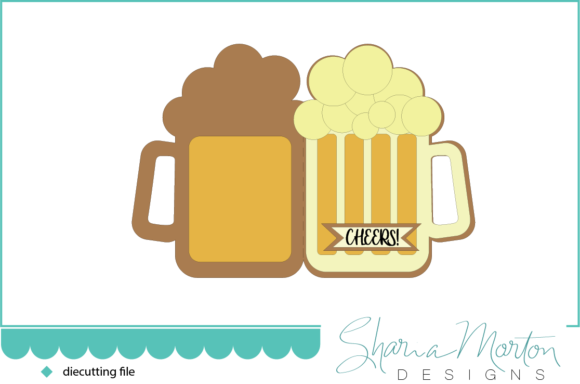
The immediate mood of this design is celebratory yet relaxed. It avoids the overly aggressive "frat party" aesthetic that often plagues men's holiday merchandise, leaning instead into a warm, pub-style camaraderie. The "frothy" element mentioned in the product description is the critical visual anchor here. In a flat vector, foam can look like a white blob, but this file suggests contours that are essential for creating depth. As an embroidery project, this shape offers natural segmentation. The separation between the glass body, the liquid level, and the foam head provides built-in color break opportunities. This is vital for keeping stitch density manageable while maintaining visual interest. For a personalized gift, the layout leaves adequate negative space for adding names or dates without overcrowding the central motif, which is a common failure point in lesser designs.
Real-World Application: The Custom Sweatshirt Test
To truly evaluate this asset, I mentally prototyped it for a high-demand item in my shop: a heavyweight cotton sweatshirt for a Father’s Day capsule collection. Sweatshirts present unique challenges due to their fleece backing and stretch. When adapting the Beer Cheers Father's Day, Birthday Card for this application, I focused on how the 3D aspect would function. If using this as an applique design, the distinct shapes allow for a layered fabric approach where the foam could be textured terry cloth and the glass a smooth twill. This tactile contrast elevates a simple sweatshirt embroidery from basic to boutique quality.
For makers using die-cutting machines like Cricut or Silhouette alongside their embroidery machines, this hybrid workflow is where the design shines. You can cut precise vinyl or HTV layers for the base and use your machine strictly for the outline or decorative satin stitch details. This reduces stitch count significantly, making the finished product softer and more wearable. From a commercial standpoint, this versatility means you can offer multiple price points: a premium fully embroidered version and a more accessible mixed-media option. Customers respond to this variety, and it allows Etsy sellers to maximize the ROI on a single digital embroidery file.
Navigating Fabric Limitations and Hoop Constraints
While the design is versatile, professional judgment requires acknowledging where it might struggle. The "3D" nature implies shading or layering that demands careful stabilizer selection. On thin or stretchy fabrics like performance tees, the weight of dense fill stitches used to create that frothy texture could cause puckering. I would advise against using the full-complexity version on lightweight knits unless you are employing a heavy cut-away stabilizer and potentially a topping to prevent stitch sink.
Furthermore, consider your hoop size limitations. Detailed beer foam requires definition to read correctly. If you scale this design down for a pocket logo or a baby bib, the intricate internal lines meant to simulate 3D volume may turn into a muddy mess of thread. In smaller formats, you must simplify. Use a running stitch for internal details rather than fills, or remove the shading entirely and rely on color blocking. Always test on scrap fabric that matches your final substrate. A design that pops on stable canvas might disappear on textured linen or dark denim. For dark fabrics specifically, ensure the thread colors have sufficient contrast; the pale yellows and whites typical of beer themes need a dark underlay or outline to prevent them from blending into black or navy garments.
Commercial Viability and Brand Consistency
For small shop products and commercial embroidery ventures, consistency is currency. The Beer Cheers Father's Day, Birthday Card possesses a clean geometry that pairs well with various typography styles, from vintage serifs to modern sans-serifs. This makes it a reliable asset for building a cohesive seasonal catalog. However, before listing any handmade product derived from this file, verify the licensing terms. Ensure you have the rights to sell finished goods versus just the digital file itself. Professionalism also extends to presentation. Use this design to create accurate printable mockups before production. Because the shape is distinct, it renders beautifully in digital previews, helping secure pre-orders and reducing waste from unsold inventory.
Value perception is another key factor. A generic beer icon feels cheap; a stylized, dimensional toast feels curated. When customers see thoughtful design execution—where the foam actually looks fluffy and the glass has weight—they trust the quality of the stitching and the garment. This directly impacts buyer engagement and repeat business. Whether you are creating an embroidered patch for a dad hat or a commemorative towel, the design’s inherent charm does the heavy lifting, provided your technical execution supports it.
Essential Designer Notes for Success
Before you commit this design to a final product, run through this practical checklist to ensure professional results:
- Verify File Compatibility: While described as a 3D SVG for cutting, confirm the inclusion of standard embroidery formats (PES, DST, JEF, etc.) if you intend to stitch it directly. Do not assume auto-digitizing software will perfectly interpret an SVG intended for vinyl.
- Test Stitch Density: Print a template at actual size and tape it to your garment. Visually assess if the coverage area is appropriate for the fabric weight. Adjust density in your software if the design feels too bulletproof for apparel.
- Check Color Contrast: View the design in grayscale or black and white. If the foam and glass lose distinction without color, add contrast stitching or outlines to ensure readability in monochromatic embroidery.
- Stabilizer Strategy: For the 3D effect, consider using puff foam under the satin stitches of the foam head, but only if the design columns are wide enough to accommodate it. Narrow columns will flatten the foam and damage needles.
- Licensing Audit: Explicitly check if the license covers both physical sales and digital mockup usage. Protect your business by understanding these boundaries before marketing.
- Wash Testing: Beer-themed items often end up in high-wear environments. Wash and dry your test sample aggressively to ensure the applique edges hold and the fill stitches don't distort over time.
Ultimately, the Beer Cheers Father's Day, Birthday Card is a strong contender for makers who understand how to leverage shape and layering. It moves beyond simple novelty and offers genuine design bones for creating high-quality, sellable merchandise. By respecting the technical requirements of embroidery and treating the 3D elements with intention, you can transform this digital asset into a standout custom apparel piece or a cherished holiday embroidery gift that resonates with real people.