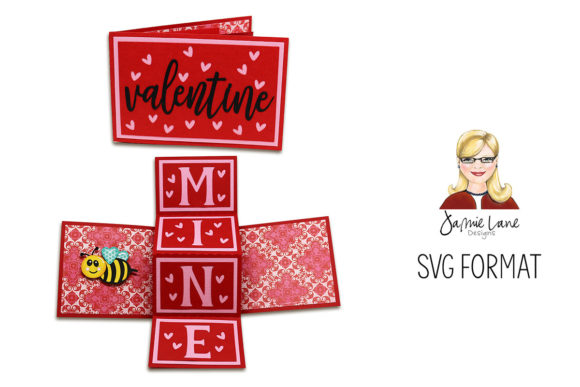
Bee Mine Twist Pop Card: An Embroidery Designer’s Review
As a designer who constantly bridges the gap between digital cutting files and needle-and-thread execution, I approach every new asset with a specific question: How does this translate to fabric? When I first opened the Bee Mine Twist Pop Card, I was looking at a 3D SVG intended for paper crafting. However, for those of us in the embroidery and custom apparel space, these structural templates are often untapped goldmines for mixed-media projects. While this is technically a paper cutting template, my review focuses on its viability as a foundation for a unique machine embroidery design or appliqué project.
The mood of this design is undeniably playful yet structured. The "Twist Pop" mechanism suggests movement and interaction, which is rare in standard embroidery. Visually, the bee theme offers a perfect balance of whimsy and classic Valentine’s sentiment. For an embroidery digitizer or mixed-media artist, the clean lines typical of a 3D SVG provide an excellent roadmap for creating registration marks or appliqué placement guides. It feels less like a rigid pattern and more like a creative prompt for a high-value personalized gift.
Real-World Application: The Mixed-Media Tote Bag Project
To truly evaluate this asset, I didn't just look at the screen; I planned a production run for a client’s boutique spring collection. We needed a standout item that wasn't just another embroidered sweatshirt. I decided to adapt the Bee Mine Twist Pop Card concept into a dimensional tote bag feature.
The goal was to create a pocket on a canvas tote bag that mimicked the twist pop card's interactivity. Using the SVG as a precise cutting guide for felt and cotton layers, I created the base shapes. Then, instead of relying solely on paper assembly, I used a running stitch to baste the layers together before applying satin stitch borders and fill stitch details for the bee. The result was a tactile, interactive element on the bag that customers could actually engage with. This application transformed a simple tote bag design into a conversation piece. For Etsy sellers and small shop owners, this kind of adaptation increases perceived value significantly because it offers an experience, not just a decoration.
Translating Paper Mechanics to Stitch and Fabric
When adapting a Shapes category file like this for textile use, you must understand how paper mechanics differ from fabric behavior. Paper holds a crisp fold; fabric drapes and stretches. If you intend to use the Bee Mine Twist Pop Card as a direct guide for an applique design, consider the following performance factors:
- Dimensional Stability: The twist mechanism requires stiffness. In paper, this is inherent. In embroidery, you must replicate this with heavy-weight stabilizer or interfacing. Without adequate support, your finished product will sag rather than pop.
- Stitch Density Management: Because the original file is designed for blades, not needles, you cannot simply auto-digitize it. You must manually assign stitch types. Use fill stitches for large color blocks to keep the item lightweight, and reserve satin stitches strictly for edge finishing. High density in a moving part will cause the fabric to buckle.
- Fabric Texture Compatibility: This design relies on precise alignment. Smooth, tightly woven fabrics like quilting cotton or twill work best. Avoid high-pile textures like terry cloth or minky unless you are using a water-soluble topping, as the intricate cuts of the twist mechanism can get lost in the nap.
Strategic Placement and Product Suitability
Not every project is the right home for this design. Based on my testing, the Bee Mine Twist Pop Card excels in specific commercial embroidery contexts while posing challenges in others.
This asset is ideal for holiday embroidery projects where novelty is key. Think interactive greeting cards made of fabric, nursery decor pillows where the "pop" element adds sensory play for babies, or premium packaging tags for handmade products. The 5-3/4 x 4 inch footprint mentioned in the product specs is a generous size, making it perfect for center chest placements on adult apparel or as the primary focal point on a standard hoop-sized pillow cover.
However, exercise caution when applying this to stretchy knits or curved surfaces like caps. The geometric precision required for a twist pop mechanism fights against the natural distortion of jersey fabric or the curve of a hat brim. If you are producing custom apparel on t-shirts, you must use a cutaway stabilizer and potentially a fusible backing to prevent the mechanical parts from warping after washing. For baby embroidery, ensure all layered elements are securely stitched down; the interactive nature means little hands will pull at it, so durability testing is non-negotiable.
Elevating Brand Value Through Technical Precision
For creative entrepreneurs and digital product sellers, how you present this design matters. Using the Bee Mine Twist Pop Card effectively signals professionalism. When I reviewed the visual appeal, I noted that the clean vector lines translate beautifully to printable mockups. Before stitching a single thread, I recommend creating black-and-white line art previews to test contrast. This helps verify if the design reads well visually without relying on color alone.
Customer trust is built on consistency. If you sell this as part of a craft business lineup, ensure your stitch-outs match the crispness of the original SVG. A sloppy satin stitch edge on a precise geometric shape looks amateurish. Conversely, a perfectly executed adaptation elevates your brand authority. Buyers recognize when a maker has taken the time to engineer a design specifically for fabric rather than forcing a paper file onto a garment.
Critical Designer Notes for Safe Execution
Before you load this file into your software or machine, please heed these practical warnings derived from real-world testing:
- Verify Licensing and Specs: This product is listed as an SVG cutting template. It does not explicitly state it includes pre-digitized embroidery formats (PES, DST, JEF, etc.). Always check the license terms to confirm if you are permitted to create derivative embroidery works for commercial sale. Do not assume a paper craft license covers commercial embroidery.
- Test on Scrap Fabric First: Never run a complex 3D adaptation on a final garment first. Test the twist mechanism on scrap fabric with your chosen stabilizer stack. Does it pop? Does it lay flat when closed? Adjust your stitch length and tension based on these tests.
- Check Thread Color Contrast: The bee motif often relies on yellow and black. On dark fabrics, ensure your underlay is sufficient to prevent the dark fabric from showing through light threads. On light fabrics, verify that the outline provides enough definition.
- Hoop Size Confirmation: While the finished card is approximately 5-3/4 x 4 inches, remember that hooping requires margin. Ensure your machine’s maximum stitch area accommodates the design plus necessary stabilization space. If you are resizing, do so in digitizing software to recalculate stitch counts, not just by stretching the file.
- Washability Assessment: If this is for a tea towel or baby item, wash your test sample. Interactive paper-style mechanisms can degrade in water. You may need to add additional tack-down stitches or avoid this design entirely for high-wear laundry items.
The Bee Mine Twist Pop Card is a delightful asset that bridges the gap between papercraft and textile art. For the experienced maker willing to put in the technical adaptation work, it offers a pathway to unique, interactive finished products that stand out in a saturated market. Approach it with respect for the medium differences, test rigorously, and you will have a standout addition to your design arsenal.