3D Haunted House Papercut Graphics for Crafts
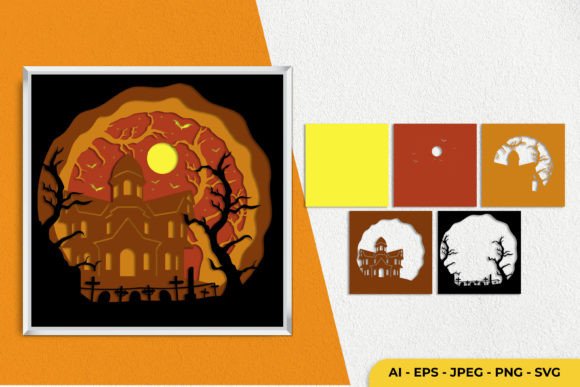
As a handmade business owner preparing for the upcoming fall and Halloween season, I am constantly evaluating new digital assets to see if they can withstand the rigors of actual production. When I first opened the 3D Haunted House Layered Papercut files, my immediate impression was one of intricate, moody elegance. This is not a cartoonish or overly cute design; rather, it evokes a vintage, storybook aesthetic that appeals to customers looking for sophisticated seasonal decor. For Etsy sellers and craft fair vendors, this distinction is vital. The mood suggests a premium handmade product, perfect for buyers who want festive items that double as year-round gothic or cottagecore accents. As a graphic design asset, it promises depth and shadow play that flat illustrations simply cannot achieve.
First Impressions and Market Appeal for Seasonal Goods
In the competitive world of Etsy products and local markets, standing out requires more than just a recognizable shape. The 3D Haunted House Layered Papercut succeeds because it leverages physical dimension. When reviewing this file for my own shop, I noted how the layered structure creates natural shadows when assembled. This makes it an exceptional choice for light boxes, shadow box frames, and greeting cards. From a business perspective, this type of illustration signals high value to the customer. It looks labor-intensive and custom, even though the precision comes from your cutting machine. For small business branding, utilizing such detailed graphics elevates your perceived quality, moving your shop away from generic printables toward artisan-crafted goods.
Best Applications for Cricut and Silhouette Projects
These are cutting files designed for use with craft cutting machines such as Silhouette, Cricut, or other cutting machines, but their versatility extends beyond simple paper layering. In my workflow testing, I found several high-value applications for this specific asset:
- Shadow Box Art: This is the primary use case. By spacing the layers with foam tape, you create a genuine 3D effect that sells beautifully as finished wall art.
- Greeting Card Fronts: Use the outermost layers as an overlay on cardstock. The negative space allows the background color to show through, creating contrast without extra ink.
- Sublimation Design: While originally a cut file, the included PNG design works wonderfully for tumbler wraps and mug designs. The detailed line work mimics pen-and-ink drawing, which prints crisply on polyester coatings.
- Sticker Design: For planner stickers or vinyl decals, use the silhouette version. The haunted house outline is distinct enough to be readable at smaller sizes, unlike some overly complex architectural clipart.
- Product Packaging: I tested cutting the design from kraft paper to use as a tag or seal on autumn candle orders. It adds a cohesive, branded touch to handmade packaging.
For those running a print-on-demand side hustle or selling digital products, this asset also serves as excellent base material for printable wall art. Just ensure you are upsampling correctly if scaling up for large format prints.
Technical Reality Check: Where to Exercise Caution
While the 3D Haunted House Layered Papercut is stunning, experienced crafters know that screen previews can be deceiving. There are specific scenarios where this asset requires careful handling to avoid wasted materials and frustration.
Avoid Micro-Sizing: Because this is a layered papercut style, it relies on fine details like window panes, shingles, and fence posts. If you attempt to resize this SVG design down to less than four inches wide, those delicate bridges will tear during weeding or cutting. This is not suitable for tiny jewelry tags or miniature cake toppers unless you significantly simplify the nodes in your software.
Vinyl Layering Challenges: Do not confuse this with a standard layered vinyl project. Traditional vinyl stacking requires registration marks and smooth surfaces. This file is engineered for paper thickness and foam spacers. Trying to layer adhesive vinyl using these exact files may result in misalignment because the design accounts for paper depth, not vinyl tack. Always check your commercial license and technical specs before committing to a production run.
Contrast Considerations: When using the PNG version for sublimation on dark fabrics, remember that white ink does not exist in standard sublimation. You must either print on white blanks or use a white under-base transfer. The intricate grey tones of the haunted house will disappear entirely on a black t-shirt without proper preparation.
Essential Workflow Notes for Handmade Business Owners
Before listing any item featuring the 3D Haunted House Layered Papercut in your creative marketplace shop, run through this practical checklist. These steps save time and protect your reputation as a quality seller.
- Test Cut First: Never send a customer order based solely on a digital preview. Run a test cut on your intended paper weight. 65lb cardstock behaves differently than 80lb cover stock. Adjust blade pressure and speed accordingly.
- Verify Line Cleanliness: Open the SVG in your design software. Check for stray nodes or open paths. A clean vector file ensures your machine doesn't pause or stutter mid-cut, which ruins the finish.
- Mockup Realistically: Don't just place the flat image on a white background. Create a product mockup that shows the depth. Photograph a physical prototype with side lighting to emphasize the 3D aspect. Customers buy the shadow, not just the paper.
- Font Pairing Strategy: This graphic has a strong personality. Pair it with a textured serif font for a vintage look, or a clean sans-serif for modern farmhouse vibes. Avoid overly curly script fonts that compete with the architectural details of the house.
- Licensing Compliance: Confirm whether your purchase includes commercial rights for physical products versus digital redistribution. Most design bundles allow for finished goods but prohibit sharing the raw SVG design. Protect your business by adhering to these terms.
- Color Calibration: If printing the illustration for t-shirt design or wall art, calibrate your printer colors. Haunted houses often rely on subtle greys and muted purples. Banding or color shifts can make the image look cheap. Test print on your final substrate.
Maximizing Value in Your Craft Collection
The 3D Haunted House Layered Papercut is more than just a seasonal novelty; it is a versatile tool for the serious maker. Whether you are creating a signature collection for a craft fair, expanding your Etsy inventory with unique shadow boxes, or designing exclusive sublimation tumblers, this asset offers significant ROI. Its strength lies in its ability to bridge the gap between digital convenience and tactile craftsmanship.
By understanding both its aesthetic strengths and technical limitations, you can integrate this graphic design asset into your workflow confidently. Remember that successful handmade businesses are built on consistency and quality control. Take the time to master the settings for this specific file, and it will become a staple in your autumn and Halloween product lineup for years to come. Always respect the complexity of the design, and it will reward you with professional-grade results that delight your customers and distinguish your brand in a crowded market.