Moon with Flowers 3D Layered Paper Cut Review
As a designer who constantly bridges the gap between digital graphics and tangible textiles, I approach every new asset with a specific question: will this actually translate to thread? When I first opened the Moon with Flowers 3d Layered Paper Cut file, my immediate reaction was one of cautious optimism. The visual depth created by the layered paper aesthetic is stunning on screen, offering a whimsical, celestial mood that feels perfect for the current market. However, translating a graphic designed for cutting machines into a viable machine embroidery design requires a critical eye. This review breaks down how this specific graphic performs when adapted for real-world stitching projects, from custom apparel to boutique merchandise.
Translating Visual Depth to Stitch Density
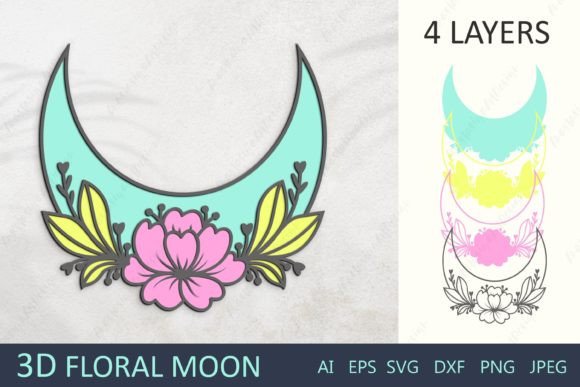
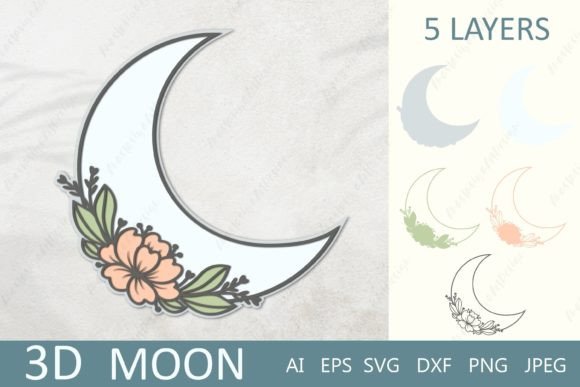
The defining characteristic of the Moon with Flowers 3d Layered Paper Cut is its illusion of dimension. In the digital realm, shadows and overlapping layers create a 3D effect. In embroidery, we cannot rely on digital drop shadows; we must create physical depth through texture and layering. As I evaluated the lines and shapes, I considered how this would function as an applique design. The distinct separation of the moon and floral elements suggests a natural opportunity for fabric layering rather than just heavy fill stitches.
For a professional finish, I recommend treating the "layers" of the paper cut as actual fabric layers. Using a lightweight cotton or felt for the base moon and a contrasting textured fabric for the flowers can mimic the 3D effect without causing excessive stitch density. If you attempt to replicate the shadow effects solely with dark thread under light thread, you risk creating a bulletproof patch that puckers on lighter fabrics. The beauty of this graphic lies in its clean silhouettes, which are ideal for satin stitch borders and running stitch details to define the edges where one layer meets another.
Real-World Application: The Custom Sweatshirt Test
To truly judge the commercial viability of this asset, I mentally prototyped it for a high-demand item: a unisex crewneck sweatshirt for an Etsy shop. The celestial theme is evergreen, but execution determines sales. For a sweatshirt embroidery project, the Moon with Flowers 3d Layered Paper Cut offers excellent placement versatility. It works beautifully as a centered chest piece or an off-center placement near the collarbone.
In this scenario, the graphic’s organic curves complement the relaxed fit of knitwear. However, fleece is unforgiving. I noted that the intricate inner details of the flowers might get lost if scaled too small. For a finished product that looks high-end, scaling the design to at least 4x4 inches allows the thread colors to breathe. Customers looking for personalized gifts often want clarity; muddy details suggest low quality. By utilizing the negative space within the moon shape for optional monogramming or small text, this graphic transforms from a simple decoration into a customizable handmade product with higher perceived value.
Navigating Fabric Limitations and Hoop Sizes
While the aesthetic is versatile, technical constraints dictate where the Moon with Flowers 3d Layered Paper Cut should not be used. The complexity of the floral overlays demands stability. I would advise against using this design on stretchy performance wear or thin jersey knits without significant modification. The weight of the stitches required to define the 3D layers can distort unstable fabrics, leading to a warped final image.
Furthermore, consider your hoop size limitations before committing to a production run. If you are working with a standard 4x4 hoop, you may need to simplify the outermost petals or reduce the overall scale, which impacts the legibility of the "paper cut" style. For baby embroidery or delicate tea towels, the dense layering might be too stiff. In these cases, converting the design to a single-layer outline or redwork style preserves the motif while respecting the substrate. Always match the design weight to the fabric texture; a heavy, multi-layered stitch out on sheer organza is a recipe for disaster, whereas it shines on canvas tote bags or denim jackets.
Commercial Value for Makers and Sellers
For Etsy sellers and small business owners, time is money. The Moon with Flowers 3d Layered Paper Cut serves as a strong foundation for commercial embroidery because of its broad appeal across demographics. It fits nursery decor, boho fashion, and spiritual wellness branding equally well. However, professionalism comes from preparation. Before listing any finished product, you must verify the licensing terms of the digital download. Ensure you have the right to sell physical embroidered items derived from this graphic.
Visual presentation is equally critical. Because this design relies on contrast to show its 3D nature, your printable mockup and product photography must reflect accurate color values. A white moon on a white shirt will fail to showcase the layered effect in photos. Test your design assets in black and white first to ensure the values read correctly without relying solely on hue. This ensures that when a customer views your listing, they instantly understand the dimensional quality of the embroidery, increasing buyer engagement and trust.
Essential Designer Notes for Success
Before you thread your needle or start your machine, adhere to these practical guidelines to ensure the Moon with Flowers 3d Layered Paper Cut translates successfully from screen to fabric:
- Test on Scrap Fabric First: Never run this design directly on a final garment. The interaction between the simulated paper layers and your chosen stabilizer needs verification. Use a scrap of the exact material you intend to embroider.
- Check Thread Color Contrast: The 3D effect depends entirely on value contrast. If using tonal threads, increase the brightness difference between layers. What looks distinct on a backlit monitor may blend together in matte rayon thread.
- Review Stitch Density: Inspect the file in your embroidery software. If the original graphic was converted automatically, you may have unnecessary jumps or overly dense fills. Manually adjust density to prevent fabric distortion.
- Confirm Hoop Size Compatibility: Measure the design dimensions after any resizing. Ensure adequate margin for your presser foot and hoop clearance to avoid hitting the frame during stitching.
- Inspect Small Details: Zoom in to 100% view. Tiny flower centers or thin connecting stems may need to be thickened or removed to prevent needle breaks and thread shredding.
- Use Proper Stabilizer: Given the potential layering, use a cut-away stabilizer for stretchy fabrics and a tear-away for stable wovens. Consider a water-soluble topping for textured fabrics like terry cloth to keep stitches crisp.
- Verify Licensing: Re-read the product description. While compatible with SVG, DXF, AI, EPS, PNG, and JPEG formats for cutting, confirm specifically that embroidery resale rights are included for your craft business.
Final Thoughts on Design Adaptation
The Moon with Flowers 3d Layered Paper Cut is more than just a pretty graphic; it is a test of a maker's ability to interpret digital art into textile reality. Its success in your shop depends not on the file itself, but on your willingness to adapt it to the physical constraints of thread and fabric. Whether you are creating a tote bag design for a craft fair or a premium embroidered patch for a clothing line, treat this asset as a blueprint rather than a rigid instruction. By respecting the mechanics of embroidery while leveraging the design's inherent charm, you can produce work that stands out for its quality, durability, and artistic integrity. Remember, in the world of handmade goods, the most successful designs are those that look as good in person as they do on screen.